
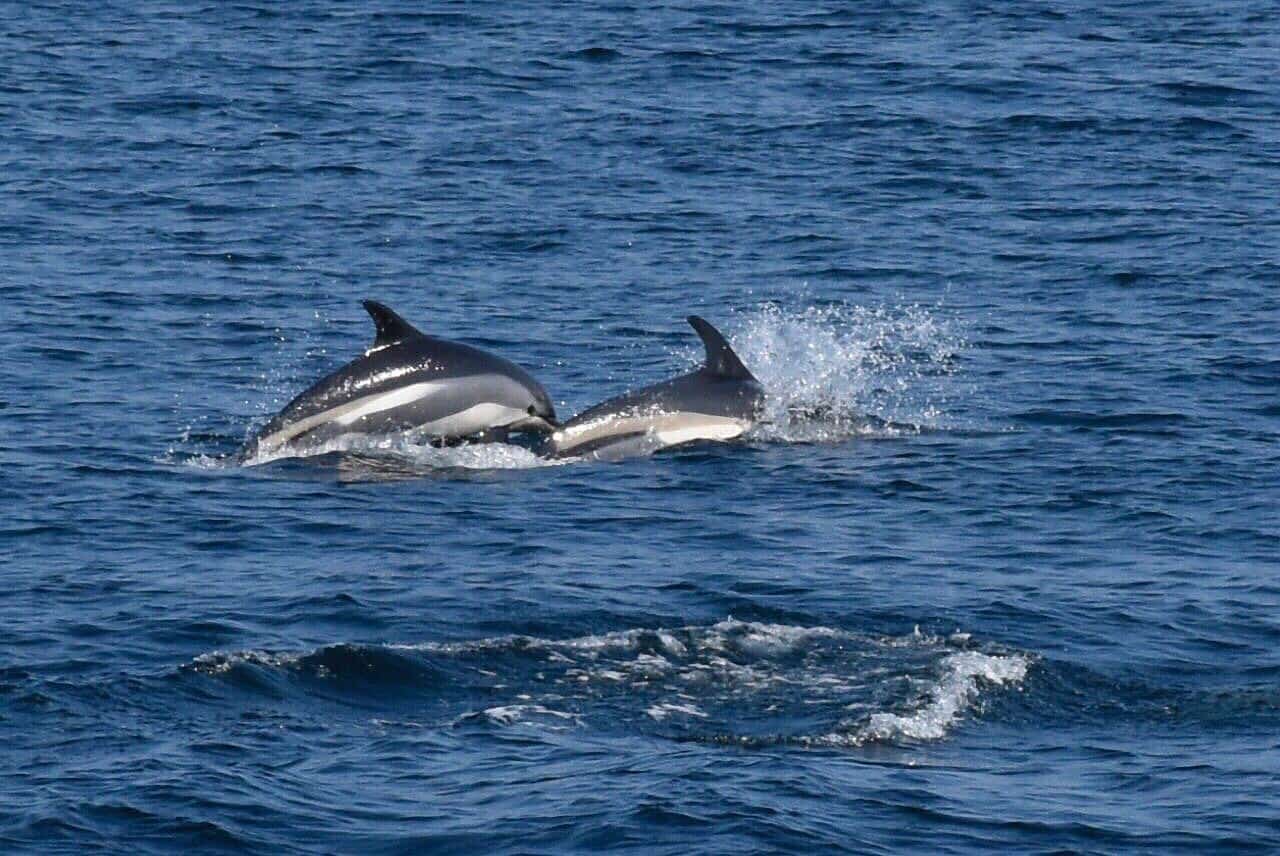
Whales and our oceans face numerous threats. Many scientists refer to whales as canaries in the coal mine — they are indicators of the damage we are doing to the environment. Throughout our trips, we introduce you to actions you can take to help protect these animals.
1. Be Active
Get outside. Walk, bike, run instead of driving when you can. Active humans are healthier humans, and active humans take action.
2. Choose Your Food Wisely
Eat sustainably caught seafood — use resources like the Monterey Bay Aquarium's Seafood Watch to guide your choices. Avoid species that are overfished or that have a high incidence of whale entanglement. Reduce meat consumption — industrial agriculture is one of the largest sources of carbon emissions and ocean dead zones.
3. Reduce Plastic Use
Plastic pollution kills whales. Sperm whales have been found dead with 30+ pounds of plastic in their stomachs. Steps you can take today:
- Refuse single-use plastic bags and straws
- Carry a reusable water bottle
- Bring your own bags to the grocery store
- Buy in bulk to reduce packaging
- Choose products with less plastic packaging
4. Reduce Garbage
Carpool, take public transit, ride your bike, walk. If you drive, drive efficiently — proper tire pressure, no unnecessary idling, good maintenance. Combine errands. When you fly, offset your carbon.
5. Reduce Transportation Impact
Carpool, take public transit, ride your bike, walk. If you drive, drive efficiently — proper tire pressure, no unnecessary idling, good maintenance. Combine errands. When you fly, offset your carbon.
6. Reduce Pesticides and Toxic Chemicals
What goes on your lawn ends up in the ocean. Skip synthetic pesticides and fertilizers. Use natural alternatives (vinegar, baking soda, soap) for cleaning. Dispose of paint, motor oil, and electronics properly — never down a drain.
7. Support Marine Conservation
Organizations doing critical work for whales:
- World Cetacean Alliance — global cetacean protection partnership (our partner)
- NOAA Stellwagen Bank National Marine Sanctuary — protects our local whale grounds
- Whale and Dolphin Conservation — international advocacy
- NEAQ (New England Aquarium) — North Atlantic right whale research
- Center for Coastal Studies — Cape Cod-based whale research
8. Watch Responsibly
If you whale watch anywhere — with us or elsewhere — choose operators who follow viewing guidelines. Federal law requires 100-yard minimum distance from humpbacks, 500 yards from right whales. We follow these rules absolutely. Avoid operators who push too close or chase whales.
9. Vote
Vote for representatives who prioritize ocean conservation, climate action, and protection of marine sanctuaries. Local elections matter — town environmental boards, conservation commissions.
10. Tell Others
Bring your kids whale watching. Bring your friends. Share what you learned. The single greatest predictor of whether someone will protect the ocean is whether they've experienced it.
"We all have the power to make a difference every day."
That's why we do what we do. See you on the water.